
The Dragon's Shadow
If you enjoyed the book please leave a review on the store where you bought it.
If you did not please let me know so I can improve as an author.
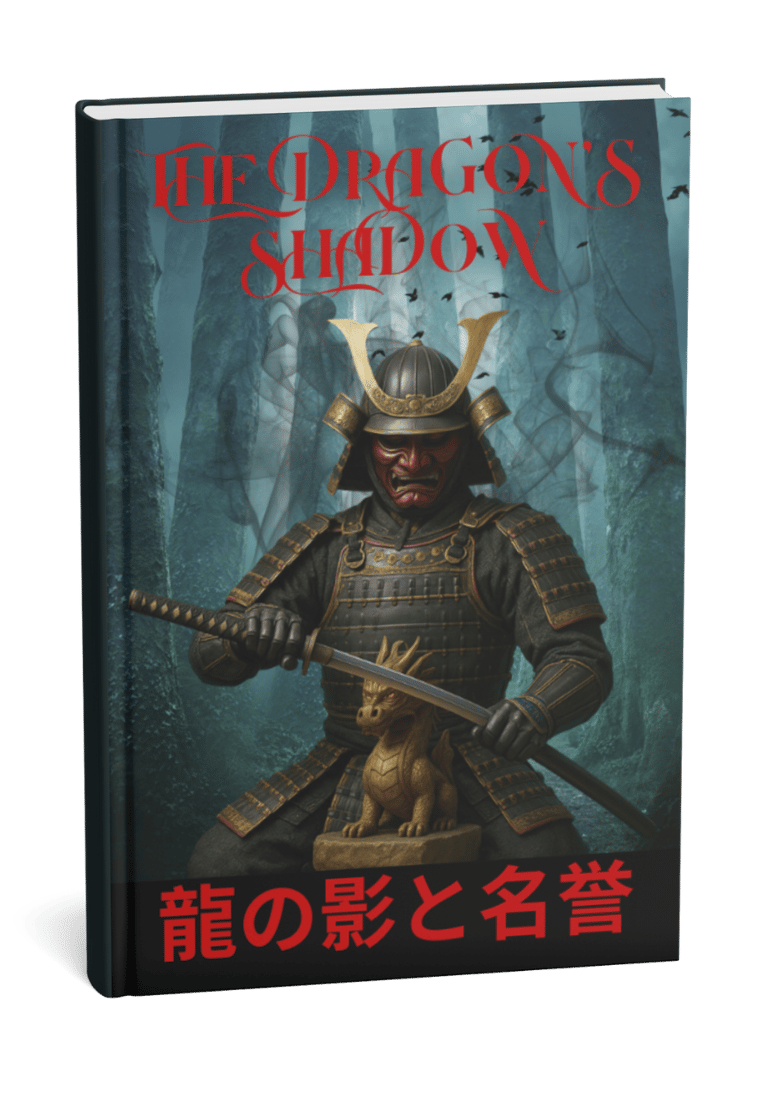
This story began with a single image that refused to fade, a dragon carved from wood, standing in the center of a village, carrying meaning far greater than its material. I wanted to explore the idea that honor is not something granted by birth or power, but something built slowly through work, loyalty, and sacrifice. In many stories, dragons are creatures to be defeated. In this one, the dragon became a witness, a keeper of memory, a symbol shaped not by magic, but by the lives given to protect it. The Dragon’s Shadow grew from an interest in how communities define themselves. Hikonoki Mura exists because its people work with care. They cut timber straight. They respect seasons. They understand that quiet consistency can carry as much weight as armies or crowns. That belief shaped every page of this book. While writing, I focused on restraint rather than spectacle. Violence is present, but it is never casual. Every conflict carries consequence. When blood is spilled, it changes the world it touches. When a life ends, something remains behind. That idea became central to the dragon itself, a creation that transforms not through ritual alone, but through loss and loyalty. The antagonist was shaped by envy rather than ambition. I wanted to show how bitterness grows when recognition feels stolen, and how corruption often begins with comparison rather than need. The witch and the lord are not forces of chaos. They are deliberate and patient. They believe that honor can be erased if its symbol is destroyed. This book is also about inheritance, not just of land or title, but of responsibility. When the village master falls, the burden does not vanish. It transfers. Younger hands must decide whether they will carry it forward or let it break. I wrote The Dragon’s Shadow slowly, letting atmosphere guide structure. I wanted the village to feel alive, the forest to feel watchful, and the dragon to feel present without ever speaking. Silence matters in this story. What is left unsaid often carries more weight than dialogue. At its core, this book asks a simple question. What happens when honor refuses to burn. I hope this story leaves you with that question.

